
Table of Contents
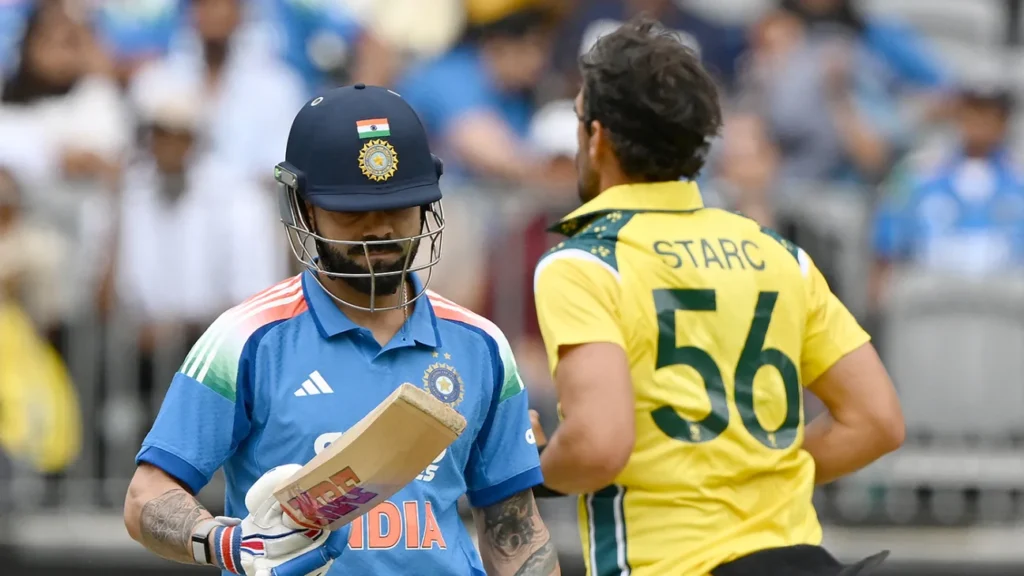
The clash between the Australian Men’s Cricket Team and India National Cricket Team in the ICC Champions Trophy 2025 semi-final was one of the most anticipated matches of the tournament. Two of world cricket’s strongest sides met in a high-pressure knockout contest where every run, wicket, and strategic decision played a crucial role. Australia entered the game with a reputation for dominating major ICC events, while India arrived with confidence after an impressive group-stage campaign. The match delivered a thrilling contest filled with quality batting, disciplined bowling, and outstanding individual performances. India eventually secured a memorable victory to book their place in the Champions Trophy final.
Match Overview
The ICC Champions Trophy 2025 semi-final between Australia and India was played on 4 March 2025 at the Dubai International Cricket Stadium. The match attracted global attention as both teams featured some of the biggest names in international cricket.
Australia won the toss and decided to bat first, hoping to put pressure on India with a challenging total on the scoreboard. Their batting lineup had experienced campaigners capable of handling pressure situations, but India’s bowling attack maintained control during key phases.
Australia posted a competitive total, but India’s batting unit produced a composed chase. The Indian top order built partnerships, rotated the strike effectively, and ensured that the required run rate remained manageable throughout the innings.
The victory highlighted India’s ability to perform under knockout pressure and continued their strong record in ICC tournaments.
| Match Details | Information |
| Tournament | ICC Champions Trophy 2025 |
| Match | Semi-Final |
| Teams | Australia vs India |
| Date | 4 March 2025 |
| Venue | Dubai International Cricket Stadium |
| Format | One Day International |
| Result | India won |
Toss Report and Playing XIs
Australia won the toss and elected to bat first. The decision was based on the belief that putting runs on the board in a knockout match would create scoreboard pressure.
India entered the contest with a balanced combination of experienced batters, versatile all-rounders, and quality spin options. Australia also fielded a strong lineup featuring established international players.
Australia Playing XI
- Travis Head
- Matthew Short
- Steve Smith
- Marnus Labuschagne
- Josh Inglis
- Alex Carey
- Glenn Maxwell
- Mitchell Marsh
- Ben Dwarshuis
- Nathan Ellis
- Adam Zampa
India Playing XI
- Rohit Sharma
- Shubman Gill
- Virat Kohli
- Shreyas Iyer
- Axar Patel
- KL Rahul
- Hardik Pandya
- Ravindra Jadeja
- Mohammed Shami
- Kuldeep Yadav
- Varun Chakravarthy
First Innings Batting and Bowling Performance
Australia started their innings with positive intent, looking to take advantage of the early overs. The opening partnership provided momentum, but India’s bowlers quickly adjusted their plans and controlled the scoring rate.
The Australian middle order attempted to rebuild after losing early wickets. Steve Smith played an important role with his experience, while other batters contributed with valuable runs. However, India’s bowling attack consistently created pressure by restricting boundaries and forcing mistakes.
India’s spinners played a major role on the Dubai surface. Kuldeep Yadav and Ravindra Jadeja used variations effectively, making stroke-making difficult for Australian batters.
Australia finished their innings with a competitive total, but they were unable to completely dominate the game because India’s bowlers produced disciplined spells throughout.
Australia Innings Summary
| Batter | Runs |
| Steve Smith | 73 |
| Alex Carey | 61 |
| Travis Head | 39 |
| Josh Inglis | 11 |
| Glenn Maxwell | 7 |
Australia Total: 264 runs
India Bowling Highlights
| Bowler | Performance |
| Mohammed Shami | Key breakthroughs |
| Varun Chakravarthy | Controlled middle overs |
| Ravindra Jadeja | Economical spell |
| Kuldeep Yadav | Important wickets |
India’s bowling performance was built around controlling partnerships rather than relying only on wicket-taking deliveries.
Second Innings Batting and Bowling Performance
India began the chase with confidence but faced early challenges from Australia’s fast bowlers. The Australian attack created pressure with disciplined lines and lengths.
Rohit Sharma provided India with a fast start, attacking the Australian bowlers during the powerplay. His aggressive approach changed the momentum of the chase.
After early momentum, Virat Kohli and Shreyas Iyer played important roles in stabilising the innings. Kohli’s ability to rotate strike and handle pressure situations was crucial in a knockout match.
The middle order continued the chase calmly, with Axar Patel and KL Rahul providing valuable contributions. India avoided unnecessary risks and maintained control until the final stages.
Australia attempted to fight back through their bowling changes, but India’s batters handled the pressure effectively.
India Innings Summary
| Batter | Runs |
| Virat Kohli | 84 |
| Shubman Gill | 30 |
| Rohit Sharma | 28 |
| Shreyas Iyer | 45 |
| KL Rahul | 42 |
India chased down the target successfully and reached the Champions Trophy final.
Australia Bowling Highlights
| Bowler | Performance |
| Ben Dwarshuis | Early pressure |
| Adam Zampa | Middle-over control |
| Nathan Ellis | Tight spells |
| Glenn Maxwell | Useful overs |
Australia’s bowlers created opportunities but could not maintain pressure for the entire innings.
Key Partnerships That Changed the Match
Steve Smith and Alex Carey Partnership
Australia’s most important partnership came through Steve Smith and Alex Carey. Their stand helped Australia recover after losing early wickets and gave their innings stability.
Both batters showed patience and adapted well to the conditions. Their partnership ensured Australia posted a respectable total.
Virat Kohli and Shreyas Iyer Partnership
India’s chase was shaped by the partnership between Virat Kohli and Shreyas Iyer. Their understanding between the wickets and ability to absorb pressure allowed India to move closer to victory.
Kohli once again demonstrated why he remains one of the best players in major tournament matches.
Player of the Match and Award Winners
Virat Kohli was named Player of the Match for his match-winning innings. His composed batting performance helped India successfully chase the Australian total in a crucial knockout fixture.
Kohli’s ability to control the innings, build partnerships, and perform under pressure was the difference between the two teams.
Head-to-Head Record Between Australia and India
Australia and India have one of the most competitive rivalries in international cricket. Both teams have produced unforgettable matches across World Cups, bilateral series, and ICC tournaments.
| Format | Matches Played | Australia Wins | India Wins |
| Tests | 100+ | Australia ahead | India competitive |
| ODIs | 150+ | Australia ahead | India close |
| T20Is | 30+ | India ahead | Competitive rivalry |
The rivalry has evolved significantly, with India becoming increasingly dominant in recent years, especially in ICC tournaments.
Match Statistics and Records
The Champions Trophy 2025 semi-final produced several important records and milestones.
Important Match Statistics
| Category | Player |
| Highest Score | Virat Kohli |
| Best Australian Batter | Steve Smith |
| Best Partnership | Smith and Carey |
| Match Winner | India |
| Key Bowling Impact | Indian spinners |
Highest Team Score and Lowest Team Score
Australia’s score represented a competitive total, but India’s successful chase showed the strength of their batting lineup.
Across the overall Australia vs India ODI rivalry:
| Record | Team | Score |
| Highest ODI Score | Australia | 389+ |
| Lowest ODI Score | India/Australia varies by match |
Both teams have produced high-scoring encounters because of their world-class batting depth.
Most Runs and Most Wickets
Leading Run Scorers in Australia vs India ODIs
| Player | Team |
| Sachin Tendulkar | India |
| Ricky Ponting | Australia |
| Virat Kohli | India |
| Rohit Sharma | India |
Leading Wicket Takers
| Player | Team |
| Brett Lee | Australia |
| Glenn McGrath | Australia |
| Ravindra Jadeja | India |
| Mohammed Shami | India |
The rivalry has featured legendary performances from both batting and bowling greats.
Recent Matches Between Australia and India
Australia and India have met frequently across all formats in recent years.
Some notable recent contests include:
- ICC Cricket World Cup 2023 Final
- World Test Championship Final 2023
- Border-Gavaskar Trophy series
- ODI bilateral series
- T20 international battles
India and Australia continue to produce high-quality cricket whenever they meet, making this one of the biggest rivalries in modern cricket.
Final Thought
The Australia vs India Champions Trophy 2025 semi-final was another memorable chapter in one of cricket’s greatest rivalries. Australia showed fighting spirit with a competitive first innings total, but India’s calm approach during the chase proved decisive. Strong batting partnerships, disciplined bowling, and experience in pressure situations helped India secure victory. Matches between these two teams continue to attract worldwide attention because they feature elite players and intense competition. This semi-final once again confirmed that Australia and India remain two of the strongest forces in international cricket.
FAQs
1. Who won the Australia vs India Champions Trophy 2025 semi-final?
India won the ICC Champions Trophy 2025 semi-final against Australia and advanced to the final.
2. Who was Player of the Match in Australia vs India semi-final 2025?
Virat Kohli was awarded Player of the Match for his important batting performance.
3. Where was Australia vs India Champions Trophy 2025 semi-final played?
The match was played at Dubai International Cricket Stadium.
4. Who scored the most runs for Australia in the match?
Steve Smith was one of Australia’s top performers with a valuable innings.
5. Why is Australia vs India considered a major cricket rivalry?
Australia and India are two of the most successful cricket nations, with a long history of competitive matches across Tests, ODIs, and T20Is.