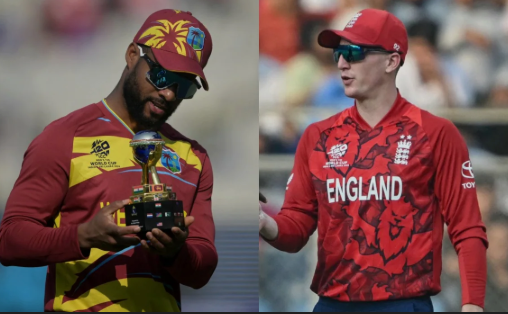
The West Indies Cricket Team vs England Cricket Team timeline is one of the most compelling stories in cricket history, filled with shifting power, unforgettable performances, and intense competition. From the early days of England’s dominance to the rise of Caribbean supremacy, this rivalry has evolved across generations and formats. It has produced iconic players, dramatic matches, and scorecards that tell stories of resilience and brilliance. Fans from both sides have witnessed moments of pride, heartbreak, and pure excitement. As the game changed, so did the rivalry, adapting to new challenges while maintaining its fierce spirit and global appeal.
Latest Matches
Tournament
Venue
Date
Toss
West Indies Score
England Score
Result
Player of the Match
Bilateral T20I
St Lucia
Nov 17, 2024
ENG (field)
218/5 (20 ov)
132/0 (14.5/14.5 ov)
England won by 3 wkts (DLS)
Evin Lewis (WI)
Bilateral T20I
St Lucia
Nov 16, 2024
ENG (field)
221/5 (20 ov)
218/5 (20 ov)
West Indies won by 5 wkts
Shai Hope (WI)
Bilateral T20I
St Lucia
Nov 14, 2024
ENG (field)
145/8 (20 ov)
149/7 (19.2 ov)
England won by 3 wkts
Saqib Mahmood (ENG)
Bilateral T20I
Barbados
Nov 10, 2024
ENG (field)
158/8 (20 ov)
161/3 (14.5 ov)
England won by 7 wkts
Jos Buttler (ENG)
Bilateral T20I
Barbados
Nov 09, 2024
ENG (field)
182/9 (20 ov)
183/2 (16.5 ov)
England won by 8 wkts
Phil Salt (ENG)
Bilateral ODI
Barbados
Nov 06, 2024
WI (field)
267/2 (43 ov)
263/8 (50 ov)
West Indies won by 8 wkts
Brandon King (WI)
Bilateral ODI
Antigua
Nov 02, 2024
WI (field)
213/5 (33.5 ov)
209 (45.1 ov)
West Indies won by 5 wkts
Matthew Forde (WI)
All-Time Head-to-Head Record
Format
Total Matches
West Indies Won
England Won
Tied/Draw/NR
Test Matches
166
59
57
50 (D)
ODI Matches
111
48
55
8 (NR)
T20 Internationals
39
19
19
1 (NR)
All-Time Batting Leaders
Player
Team
Runs
High Score
Format Focus
Brian Lara
WI
2,983
400
Test
Shivnarine Chanderpaul
WI
3,444
150
Multi-Format
Viv Richards
WI
3,214
291
Test/ODI
Joe Root
ENG
2,500
226
Test/ODI
Chris Gayle
WI
3,307
162
ODI/T20I
All-Time Bowling Leaders
Player
Team
Wickets
Best Bowling
Format Focus
Curtly Ambrose
WI
164
8/45
Test
Courtney Walsh
WI
145
6/74
Test
James Anderson
ENG
100+
7/42
Test
Adil Rashid
ENG
42
4/2
T20I (Record)
Malcolm Marshall
WI
127
7/22
Test
The First Battles on the Field
The early encounters between the West Indies and England were more than just cricket matches, they were lessons in resilience and adaptation. When England first toured the Caribbean in the late 1920s, they arrived as the more experienced and structured side, while West Indies were still finding their feet in international cricket. The initial matches reflected this gap clearly, with England dominating both tactically and mentally. However, beneath the surface, signs of Caribbean potential were beginning to emerge. Players from the West Indies showed flashes of brilliance with both bat and ball, even if consistency was lacking. These matches were crucial in shaping the identity of the West Indies team, as they learned to handle pressure, understand conditions, and compete against a seasoned opponent. Scorecards from these games often highlighted England’s control, but they also revealed moments where West Indies challenged expectations. Over time, these early battles laid the groundwork for a fierce and competitive rivalry that would evolve dramatically in the decades to come.
Year
Venue
Match Result
Key Performer
Highlight
1928
Lord’s
England won
Learie Constantine
WI showed early promise
1929
Barbados
England won
George Headley
First signs of resistance
1930
Jamaica
Draw
Herman Griffith
Strong WI bowling spell
1933
Trinidad
England won
Wally Hammond
England dominance continues
1935
Guyana
Draw
Clifford Roach
WI batting improves
A Shift in Belief and Identity
As the early defeats began to fade into experience, the West Indies slowly transformed from underdogs into a team that believed it belonged on the same stage as England. The 1930s and 1940s marked a crucial turning point, where individual brilliance started to blend with collective confidence. Batsmen like George Headley carried the weight of expectation and delivered performances that forced England to rethink their approach. No longer were the West Indies just competing, they were beginning to challenge. The team adapted tactically, showing greater discipline with the ball and more patience with the bat. Matches became tighter, and England found themselves pushed into uncomfortable situations more often than before. Scorecards from this era reflected a shift, with West Indies posting competitive totals and producing match-defining spells. This period was not just about results, it was about identity. The Caribbean side started playing with pride, purpose, and a growing sense of unity. These years laid the emotional and strategic foundation for what would soon become one of cricket’s most dominant forces.
Year
Venue
Match Result
Key Performer
Highlight
1939
Jamaica
Draw
George Headley
Captain’s resilient century
1948
Lord’s
West Indies won
Everton Weekes
Historic overseas victory
1950
Manchester
West Indies won
Sonny Ramadhin
Spin dominance shocks England
1950
Lord’s
West Indies won
Alf Valentine
Spin duo controls the game
1954
Barbados
Draw
Clyde Walcott
Strong WI batting display
The Rise of Caribbean Dominance
By the late 1960s and especially through the 1970s and 1980s, the West Indies transformed from a competitive side into a ruthless, world-dominating force. This was the era when fear became a factor, particularly for England batsmen facing the relentless pace attack of the Caribbean. Fast bowlers operated in packs, delivering short balls with precision and aggression, leaving little room for comfort. England, once the dominant force, now found themselves on the back foot, struggling to counter both the skill and intimidation. West Indies’ batting unit also matured, with powerful stroke play and match awareness turning good positions into commanding victories. Scorecards from this period often showed one-sided contests, with England collapsing under pressure or failing to chase steep targets. What made this dominance special was its consistency across conditions, whether at home or in England. The Caribbean side played with confidence, flair, and authority, redefining how cricket could be played. This phase did not just shift results, it reshaped the global balance of power in cricket and established West Indies as the team to beat.
Year
Venue
Match Result
Key Performer
Highlight
1976
The Oval
West Indies won
Viv Richards
Dominant century under pressure
1980
Lord’s
West Indies won
Malcolm Marshall
Pace attack crushes England
1984
Headingley
West Indies won
Joel Garner
Devastating bowling spell
1985
Manchester
West Indies won
Gordon Greenidge
Solid opening sets tone
1988
Bridgetown
West Indies won
Curtly Ambrose
England struggles vs pace
Legends Collide and Rivalry Peaks
As the rivalry matured, it became a stage where legends from both sides collided, turning every series into a spectacle of skill, pride, and intense competition. This period saw iconic names defining matches with moments of brilliance that are still talked about today. For West Indies, players like Viv Richards and Brian Lara carried the legacy of dominance, while England responded with greats such as Ian Botham and Graham Gooch. These were not just contests between teams, but personal battles that added fire to the rivalry. Every innings, every spell, and every session carried pressure, as individual performances often decided the outcome. Scorecards from this era were filled with centuries, five-wicket hauls, and game-changing partnerships. Matches swung dramatically, keeping fans on edge and players under constant scrutiny. The intensity on the field was matched by roaring crowds, making each encounter unforgettable. This phase represented the peak of the rivalry, where talent met temperament, and cricket was played at its highest level.
Year
Venue
Match Result
Key Performer
Highlight
1981
Headingley
England won
Ian Botham
Match-winning all-round performance
1990
Antigua
England won
Graham Gooch
Marathon 333-run innings
1994
Barbados
West Indies won
Brian Lara
Elegant century under pressure
1998
Kingston
West Indies won
Curtly Ambrose
7-wicket spell dominates
2004
Lord’s
England won
Andrew Flintoff
All-round brilliance seals match
The Modern Era and Changing Dynamics
The rivalry between the West Indies and England entered a new phase in the 2000s, shaped by the rise of limited-overs cricket and the explosive influence of T20 formats. England reinvented themselves with an aggressive, fearless approach, while West Indies leaned into their natural power-hitting strength. Players like Chris Gayle and Kieron Pollard brought unmatched hitting ability, turning matches in a matter of overs. England responded with modern greats such as Joe Root and Ben Stokes, who combined consistency with match-winning temperament. The balance of power became less predictable, with both teams capable of dominating on their day. Scorecards in this era often featured high-scoring thrillers, rapid chases, and dramatic collapses. Tactical innovation also played a key role, with captains experimenting with field placements, bowling variations, and batting orders. Unlike earlier decades, no team held long-term dominance, making each series fresh and competitive. This modern chapter reflects a rivalry that has evolved with the game itself, fast-paced, unpredictable, and deeply entertaining for fans around the world.
Year
Venue
Match Result
Key Performer
Highlight
2004
Lord’s
England won
Andrew Flintoff
All-round match control
2009
Barbados
West Indies won
Chris Gayle
Explosive century chase
2016
Kolkata
West Indies won
Carlos Brathwaite
Power hitting in crunch moments
2019
Southampton
England won
Ben Stokes
Match-winning knock under pressure
2022
Antigua
Draw
Joe Root
Consistent batting display
Matches That Redefined the Rivalry
Certain encounters between the West Indies and England did more than just decide a result, they reshaped the narrative of the rivalry itself. These were matches where momentum shifted, reputations were built, and history took a new turn. One such moment came when Viv Richards dominated England with fearless stroke play, setting the tone for Caribbean supremacy. Years later, Brian Lara produced innings of rare brilliance that reminded the world of West Indies’ enduring class. England, however, had their own defining responses, with Andrew Flintoff and Ben Stokes delivering match-winning performances under immense pressure. These games were often filled with dramatic twists, from unexpected collapses to breathtaking chases. Scorecards from such matches tell stories of tension, resilience, and sheer determination. They highlight not just numbers, but moments where players rose above the ordinary. Each of these contests left a lasting imprint, proving that this rivalry was never one-sided for long. Instead, it evolved through these defining clashes, keeping fans invested and ensuring that every new match carried the weight of history.
Year
Venue
Match Result
Key Performer
Highlight
1976
The Oval
West Indies won
Viv Richards
Match-defining century
1994
Antigua
West Indies won
Brian Lara
Record-breaking innings
2004
Lord’s
England won
Andrew Flintoff
All-round dominance
2016
Kolkata
West Indies won
Carlos Brathwaite
Power hitting turnaround
2019
Headingley
England won
Ben Stokes
Incredible chase under pressure
Tactical Chess Between Bat and Ball
The rivalry between the West Indies and England has always been as much about strategy as it is about skill. Over the decades, both teams have constantly adjusted their tactics, trying to outthink and outplay each other in changing conditions. During the dominance era, West Indies relied heavily on pace, with legends like Curtly Ambrose and Courtney Walsh using bounce and aggression to dismantle England’s batting lineup. England, in response, focused on technique and patience, often building innings slowly to counter the threat. In later years, the battle evolved with the inclusion of spin, swing, and variations in limited-overs formats. Bowlers began using slower balls, yorkers, and fielding plans to restrict explosive hitters. At the same time, batsmen adapted with innovative strokes and fearless intent. Captains played a crucial role, constantly adjusting field placements and bowling changes based on match situations. Scorecards from these contests reflect this tactical depth, with shifts in momentum often decided by a single strategic move. This ongoing chess match between bat and ball has kept the rivalry dynamic, ensuring that no two encounters ever feel the same.
Year
Strategy Focus
Team Advantage
Key Player
Tactical Highlight
1984
Pace Attack
West Indies
Curtly Ambrose
Short ball dominance
1995
Swing Bowling
England
Darren Gough
Early breakthroughs
2009
Power Hitting
West Indies
Chris Gayle
Aggressive top order
2015
Fielding Strategy
England
Eoin Morgan
Smart field placements
2020
Variations in T20
Both
Jofra Archer
Effective death bowling
Conclusion
The journey of the West Indies Cricket Team vs England Cricket Team timeline reflects more than just wins and losses, it captures the essence of cricket’s evolution. From historic Test battles to modern T20 thrillers, both teams have shaped each other’s legacy through fierce competition. Legendary players, tactical battles, and unforgettable scorecards have defined this rivalry over decades. While dominance has shifted at different times, the intensity has never faded. Today, it stands as a balanced and unpredictable contest, promising more memorable clashes in the future as new stars rise and continue this rich cricketing story.