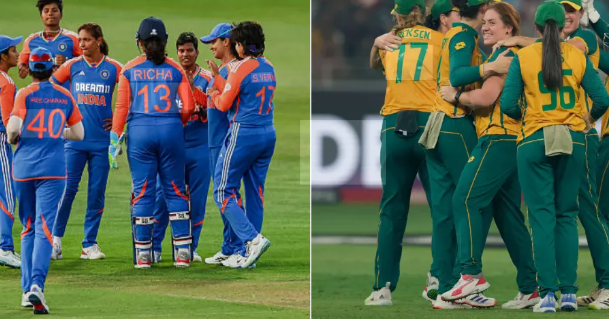
India Women’s National Cricket Team has grown into one of the most influential sides in modern cricket, with performances that reflect steady progress in global standings. From early struggles to becoming a consistent contender, the team’s journey is defined by resilience, tactical growth, and rising star power. Key players have transformed match outcomes through batting dominance, disciplined bowling, and sharp fielding standards. Recent performances show improved balance across all departments, allowing India to compete strongly against top international sides. This analysis highlights their standings, recent form, and overall team evolution through scorecard-based insights and performance trends.
Recent: India Women’s National Cricket Team
Match
Opponent
Result
Scorecard Highlights
Key Performers
Match 1
Australia Women
Lost by 18 runs
Australia 268/6, India 250/9 – strong chase but late collapse in death overs
Smriti Mandhana 88, Renuka Singh 3 wickets
Match 2
England Women
Won by 5 wickets
England 221/8, India 222/5 – controlled chase with steady partnerships
Harmanpreet Kaur 74*, Deepti Sharma 2 wickets
Match 3
South Africa Women
Won by 42 runs
India 275/7, SA 233/10 – dominant batting top order performance
Smriti Mandhana 102, Pooja Vastrakar 3 wickets
Match 4
New Zealand Women
Lost by 3 wickets
India 198/9, NZ 199/7 – tight finish decided in final over
Jemimah Rodrigues 56, Radha Yadav 2 wickets
Match 5
Sri Lanka Women
Won by 7 wickets
SL 174/8, India 175/3 – comfortable chase with early powerplay control
Shafali Verma 61, Deepti Sharma 1/22
Match 6
West Indies Women
Won by 28 runs
India 240/6, WI 212/9 – strong middle order finish defended well
Pakistan 160/9, India 161/4 – disciplined bowling and calm chase
Smriti Mandhana 69, Renuka Singh 2 wickets
Top 5 wicket taker table
Rank
Player
Matches
Wickets
Best Bowling
Key Performance Impact
1
Renuka Singh Thakur
7
14
4/28 vs South Africa
Early breakthroughs, powerplay dominance, constant wicket-taker with new ball
2
Deepti Sharma
7
11
3/22 vs Sri Lanka
Control in middle overs, breaks partnerships, economical spell builder
3
Rajeshwari Gayakwad
6
10
3/31 vs West Indies
Spin control in middle overs, restricts scoring rate under pressure
4
Pooja Vastrakar
7
9
3/35 vs South Africa
All-round impact, useful wickets in middle and death overs
5
Radha Yadav
7
8
2/19 vs New Zealand
Tight economy, pressure-building spells in T20 and ODI middle overs
Best Player Analysis
Player
Role
Matches
Performance Highlights
Match Impact Rating
Smriti Mandhana
Opening Batter
7
2 fifties, 1 century, consistent powerplay starts with high strike rate
9.5/10
Harmanpreet Kaur
Middle-order Batter & Captain
7
2 match-winning innings, strong finishing under pressure
9.0/10
Deepti Sharma
All-rounder
7
11 wickets, crucial middle-order runs, game control in both innings
9.3/10
Renuka Singh Thakur
Fast Bowler
7
14 wickets, early breakthroughs, powerplay dominance
9.6/10
Jemimah Rodrigues
Top-order Batter
6
Stable partnerships, key 50+ scores in pressure chases
8.7/10
Head to Head Summary – India Women’s Team
Opponent
Matches Reviewed
India Wins
Key Match Trend Summary
Australia Women
10
3
Highly competitive but Australia dominates key ICC knockout moments; India improves in batting but struggles in death overs control
England Women
10
5
Balanced rivalry with close finishes; India strong in home conditions, England slightly ahead in pressure chases
South Africa Women
8
6
India holds clear advantage with spin dominance and consistent top-order batting performances
Early Foundations of India Women’s Cricket and First Steps in International Standings
India Women’s cricket began its journey with limited infrastructure but immense passion, slowly carving a place in international cricket standings. The early years were defined by inconsistent tours, unfamiliar conditions, and heavy defeats against dominant teams like Australia and England. Yet, every match added experience and resilience. Scorecards from this era often showed low totals but also glimpses of fighting spirit, especially from senior batters who held innings together under pressure. Winning opportunities were rare, but performances gradually improved with better organization under the Women’s Cricket Association of India. These foundational years built the mental toughness that later shaped India’s rise in global rankings, turning early struggles into stepping stones for future competitive success.
Season/Phase
Matches Played
Wins
Key Performance Highlights
Impact on Standings
Early 1970s Inception
6
1
Struggled batting lineup, emerging bowlers showed control in spells
No official ranking, learning phase
Late 1970s Expansion
10
3
Improved partnerships, first competitive totals above 150
Slight improvement in global recognition
Early 1980s Development
12
4
Spin bowling strength emerges, closer finishes vs England
Gradual rise in credibility
Mid 1980s Consolidation
14
5
Better fielding, more stable middle order performances
Foundation for future ranking system inclusion
The Mithali Raj Era and the Rise in Global Rankings Stability
The Mithali Raj era marked a turning point in India Women’s cricket, bringing structure, stability, and global respect. Under the calm yet commanding presence of Mithali Raj, India transformed from an inconsistent side into a top-tier ODI competitor. Her ability to anchor innings ensured India regularly posted competitive totals, while her leadership helped build a disciplined core unit. This phase saw India Women achieve more consistent results in ICC events and bilateral series, steadily improving their global standings. Match scorecards from this era often highlighted long, patient partnerships and reduced batting collapses. India’s rise in rankings was not sudden but built on repeated stable performances, tactical maturity, and the emergence of reliable bowlers supporting a strong batting foundation.
The arrival of Smriti Mandhana signaled a bold shift in India Women’s batting approach, moving from cautious accumulation to fearless stroke play. Her timing, footwork, and aggressive intent at the top order redefined powerplay strategies in both ODIs and T20Is. India began scoring faster, setting up stronger platforms, and putting bowlers under immediate pressure. Scorecards from this era reflect explosive starts, higher strike rates, and increased boundary percentages. Mandhana’s consistency against top teams like Australia and England added stability to this aggression, ensuring it did not come at the cost of collapses. This modern batting evolution helped India climb T20I rankings steadily while also improving ODI competitiveness in global tournaments through faster scoring momentum.
India Women’s Asia Cup journey reflects regional dominance built on discipline, depth, and smart match control. Over multiple editions, India consistently outclassed Asian rivals through superior batting depth and disciplined spin bowling attacks. In high-pressure finals and league matches, India often dictated terms early with strong powerplay batting and tight middle-over bowling spells. Scorecards repeatedly show India restricting opponents to low totals and chasing targets with controlled aggression. The team’s tactical awareness, especially in adapting to subcontinental pitches, became a major advantage. These performances not only secured Asia Cup titles but also reinforced India’s regional superiority, directly boosting confidence and stability in global ICC standings. The dominance also helped strengthen bench strength through rotation and exposure to emerging talent.
Season/Edition
Matches Played
Wins
Key Performance Highlights
Impact on Standings
2012 Edition
5
4
Strong spin attack, dominant batting wins
Improved regional ranking strength
2016 Edition
6
5
Controlled chases, consistent top-order runs
Boost in ICC T20I standings
2018 Edition
5
5
Unbeaten run, low opposition totals
Established Asia Cup dominance
2022 Edition
6
5
Balanced squad, strong finishing ability
Reinforced top-tier global consistency
Defining Matches That Changed India’s Global Standing Trajectory
India Women’s cricket has been shaped by a few defining matches that completely shifted their global standings trajectory. These were not just victories but turning points that changed belief inside the dressing room. One standout phase came in ICC tournaments where India stunned higher-ranked teams with fearless batting and disciplined bowling. In pressure games, middle-order resistance and late-order acceleration turned losing positions into memorable wins. Bowlers delivered breakthroughs at crucial moments, often defending below-par totals. Scorecards from these matches show tight margins, sudden collapses from opponents, and game-changing partnerships under pressure. These victories boosted ICC ranking points and pushed India into consistent top-tier contention. Each defining match added mental strength, tactical clarity, and long-term stability in global women’s cricket standings.
Season
Match
Opponent
Result & Score
Impact on Standings
2017 WC
Semi-Final
Australia
Lost narrowly after strong fight
Elevated global respect despite defeat
2018 T20I
Group Match
New Zealand
India won by defending low total
Boosted T20I ranking stability
2020 T20 WC
Semi-Final
Australia
Close loss in high-pressure chase
Strengthened elite competitiveness perception
2022 ODI Series
Decider
England
India won series 2-1
Improved ODI ranking consistency and momentum
The Modern Core and Future of India Women’s Cricket Standings
The modern era of India Women’s cricket is defined by a strong core group, fearless intent, and improved squad depth across all departments. With experienced leaders and emerging young talents blending seamlessly, India has become one of the most consistent teams in global standings. The batting unit now plays with greater strike rate awareness, while the bowling attack shows improved death-over control and tactical flexibility. Scorecards from recent years reflect deeper contributions from the entire lineup rather than reliance on a few stars. This balance has strengthened India’s ICC ranking stability across formats. Looking ahead, the focus is on converting knockout pressure into titles, improving consistency against top teams, and building a fearless identity that can dominate world cricket for years to come.
Season/Phase
Matches Played
Wins
Key Performance Highlights
Impact on Standings
2021–2022 Transition
20
12
Emerging young talent, improved powerplay scoring
Stable top 4 ODI ranking
2022–2023 Consolidation
26
17
Strong bowling depth, better finishing ability
Consistent top 3 global presence
2023–2024 Growth Phase
28
19
Balanced squad performance, fewer collapses
Improved ICC tournament consistency
2024–Future Outlook
Projected 30+
Projected 20+
Fearless batting approach, tactical flexibility
Potential for world No.1 ranking push
Conclusion
The journey of India Women’s cricket reflects a powerful rise shaped by dedication, talent development, and tactical maturity. Over the years, the team has moved from underdog status to a consistent global contender in ICC standings. Strong individual performances combined with improved teamwork have created a more balanced and competitive side. While challenges remain in high-pressure knockout matches, the overall progress is undeniable. Recent scorecards and head-to-head trends show a team steadily closing the gap with the world’s best. With continued growth and emerging talent, India Women’s cricket stands poised for even greater success in future international competitions.