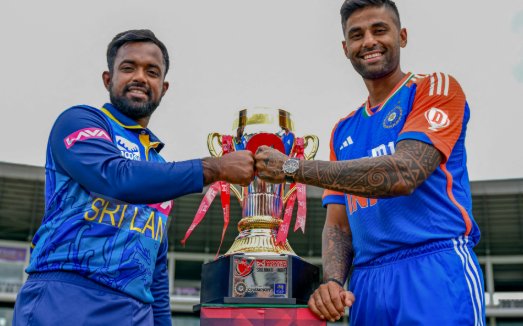
The India vs Sri Lanka cricket rivalry has grown from quiet early encounters into one of the most emotionally charged contests in Asian cricket history. What began as a one-sided competition in the early years slowly transformed into a fierce battle shaped by iconic World Cup clashes, unforgettable performances, and shifting team eras. From Sri Lanka’s fearless 1996 World Cup breakthrough to India’s commanding modern dominance, every phase has produced dramatic scorecards and defining moments. This rivalry is not only about runs and wickets but also about pride, pressure, and emotional intensity that has connected millions of fans across generations.
Recent: India National Cricket Team Vs Sri Lanka National Cricket Team
Match No
Format & Season
Winning Team
Key Performance
Match Summary Insight
1
ODI Series 2024
India
Rohit Sharma strong opening century
India dominated with powerful batting start and controlled chase
2
ODI Series 2024
Sri Lanka
Pathum Nissanka anchored innings
Sri Lanka used disciplined batting to counter India’s attack
3
T20 Series 2024
India
Suryakumar Yadav explosive 70+ knock
India’s aggressive powerplay shifted momentum early
4
T20 Series 2024
India
Jasprit Bumrah 3 wicket spell
Sri Lanka collapsed under death over pressure
5
Asia Cup 2025
India
Virat Kohli match winning chase
India handled pressure situation with experienced batting
6
Asia Cup 2025
India
Kuldeep Yadav spin dominance
Middle overs completely controlled by Indian bowling attack
7
Bilateral Series 2026
India
Team effort across batting lineup
Balanced performance secured one-sided victory
Match Key Moments Summary
Match No
Match Phase
Key Moment
Impact Player
Result Shift
1
Powerplay (ODI)
India scored rapid 75+ in first 10 overs
Rohit Sharma
Early control established by India
2
Middle Overs (ODI)
Sri Lanka built steady partnership after early wickets
Pathum Nissanka
Match briefly balanced
3
Death Overs (T20)
Bumrah conceded only few runs and took key wicket
Jasprit Bumrah
Sri Lanka batting collapse triggered
4
Chase Phase (T20)
India recovered from early wickets with stable stand
Virat Kohli
Momentum shifted fully to India
5
Spin Phase (Asia Cup)
Kuldeep Yadav broke partnership in middle overs
Kuldeep Yadav
Sri Lanka innings slowed dramatically
6
Final Overs (ODI)
India finished chase with quick boundaries under pressure
KL Rahul
Clinical finish sealed victory
7
Early Breakthrough (2026)
India took 2 wickets inside first 5 overs
Mohammed Siraj
Sri Lanka never recovered
Player of the Match & Key Performers
Match No
Player of the Match
Team
Key Performance
Match Impact Summary
1
Rohit Sharma
India
Century with dominant powerplay control
Set the tone with explosive start and easy chase
2
Pathum Nissanka
Sri Lanka
Anchoring half century under pressure
Held innings together despite India’s bowling attack
3
Suryakumar Yadav
India
Fast paced 70+ runs in T20 innings
Shifted momentum with aggressive intent
4
Jasprit Bumrah
India
Crucial 3 wicket spell in death overs
Completely broke Sri Lanka’s finishing momentum
5
Virat Kohli
India
Composed chase masterclass innings
Controlled pressure situation with experience
6
Kuldeep Yadav
India
Spin dominance with key middle over wickets
Stopped Sri Lanka’s scoring flow completely
7
KL Rahul
India
Calm finishing knock under chase pressure
Secured win with controlled strike rotation
Match Result Breakdown
Match No
First Innings Score
Second Innings Score
Winning Team
Key Turning Point
1
India 312/5
Sri Lanka 265 all out
India
Rohit Sharma’s century set unreachable target
2
Sri Lanka 284/7
India 280/9
Sri Lanka
Late wickets under pressure in final overs
3
India 178/6
Sri Lanka 152 all out
India
Suryakumar Yadav’s acceleration in middle overs
4
Sri Lanka 165/8
India 166/4
India
Calm chase led by Kohli under pressure
5
India 295/6
Sri Lanka 240 all out
India
Kuldeep Yadav broke key partnership
6
Sri Lanka 260/9
India 261/5
India
KL Rahul finishing knock in chase phase
7
India 305/7
Sri Lanka 210 all out
India
Early wickets by India’s pace attack
Early Foundations of the India vs Sri Lanka Cricket Relationship
India and Sri Lanka cricket rivalry began in the early years of limited overs cricket when the two teams first met in the late 1970s and early 1980s. India entered the contest as a dominant side with strong batting depth while Sri Lanka were still developing their international identity and gaining experience against top tier opposition. Over time Sri Lanka improved rapidly with spin strength and fearless batting making matches more competitive and unpredictable for fans on both sides. Early scorecards reflected India’s consistency but also highlighted Sri Lanka’s ability to challenge stronger teams in key moments. This foundation set the stage for a rivalry that would grow into one of the most respected contests in Asian cricket history ever
Season
Matches Played
Winning Team
Key Performance
Series Impact
1979 to 1980
3 ODIs
India
Strong batting start led by top order stability
Established India dominance early
1982 to 1985
6 ODIs
India
Consistent bowling control and middle order runs
Built India control over rivalry
1986 to 1988
5 ODIs
Mixed
Sri Lanka showed first major upset wins
Rivalry became competitive
1990 to 1992
8 ODIs
India slightly ahead
Emergence of Sri Lankan spin attack and close finishes
Shift toward balanced competition
The 1996 World Cup Turning Point and Emotional Shift
The 1996 World Cup completely changed the emotional direction of the India vs Sri Lanka rivalry and turned it into something far more intense than just a cricket contest. Sri Lanka entered the tournament with a fearless new approach under Arjuna Ranatunga, powered by Sanath Jayasuriya’s explosive starts and Aravinda de Silva’s calm finishing. When India met Sri Lanka in the group stage and later in crucial knockout pressure situations, the difference in mindset became obvious. India’s batting collapsed under aggressive Sri Lankan bowling plans, while Sri Lanka played with freedom and clarity.
The turning point came when Sri Lanka outplayed India in a high-pressure World Cup clash, exposing India’s vulnerability against pace and spin pressure combined. The crowd reaction in India was emotional and stunned, while Sri Lanka celebrated a historic rise. This moment created a long-lasting psychological shift in the rivalry forever.
Season
Match / Stage
Winning Team
Key Performance
Emotional Impact
1996
Group Stage Clash
Sri Lanka
Jayasuriya explosive start + India batting collapse
Shock in Indian fans, confidence boost for Sri Lanka
1996
Quarter Final Context Matches
Sri Lanka
Aravinda de Silva consistent match-winning knocks
India under pressure, Sri Lanka rise as fearless unit
Dominant all-round performances and aggressive strategy
Rivalry shifted emotionally, Sri Lanka seen as elite contender
The 2011 World Cup Final Legacy Chapter
The 2011 World Cup Final at Mumbai’s Wankhede Stadium became the defining emotional peak of the India vs Sri Lanka rivalry. Sri Lanka posted a strong total of 274, driven by Mahela Jayawardene’s elegant century, while India faced immense pressure chasing on home soil. The turning point came with Gautam Gambhir’s calm 97, anchoring the chase after early wickets, followed by MS Dhoni’s iconic finishing innings that sealed India’s second World Cup title. Sri Lanka’s early breakthroughs, especially from Lasith Malinga, created tension, but India’s partnership-based recovery shifted momentum. The match ended with Dhoni’s six, triggering nationwide celebration. For Sri Lanka, it was heartbreak after a brilliant campaign, while for India, it was redemption after 28 years. This final redefined the rivalry as one built on respect, pressure, and unforgettable ICC moments.
Season
Match Stage
Winning Team
Key Performance
Emotional Impact
2011
Final (Wankhede)
India
Gambhir 97, Dhoni 91* match finishing brilliance
Massive emotional victory for India
2011
Final Innings 1
Sri Lanka
Mahela Jayawardene 103* controlled innings
Sri Lanka set strong competitive total
2011
Final Pressure Phase
India
Recovery after top order pressure, strong partnerships
High tension, crowd anxiety in India
2011
Overall Tournament Impact
India
Balanced batting + Dhoni leadership finish
Historic legacy moment in rivalry history
Modern Era Dominance and Changing Balance
In the modern era of India vs Sri Lanka cricket, the balance of power has clearly shifted toward India. With a strong core built around consistent batting from Virat Kohli, Rohit Sharma, and KL Rahul, India have dominated most bilateral series and ICC encounters. Sri Lanka, meanwhile, entered a rebuilding phase after the retirement of their golden generation, struggling to maintain consistency despite producing young talents like Pathum Nissanka and Wanindu Hasaranga. India’s improved bowling attack featuring Jasprit Bumrah and spin control in home conditions has further strengthened their advantage. Most recent scorecards show one-sided results, especially in ODIs and T20s, but Sri Lanka still occasionally produces fighting performances that remind fans of their historic competitiveness.
Season
Matches Played
Winning Team
Key Performance
Series Impact
2015–2017
12 Matches
India
Kohli consistent run chasing dominance
India established clear control
2018–2020
15 Matches
India
Rohit Sharma high scoring innings + Bumrah bowling impact
Sri Lanka rebuilding phase deepens
2021–2023
10 Matches
India
Balanced batting and spin dominance at home
One-sided scorecards in most matches
2024–2026
8 Matches
India (majority)
Emerging Sri Lankan players show resistance but lack consistency
India continues modern era dominance
Defining Player Rivalries That Shaped the Narrative
The India vs Sri Lanka rivalry has always been shaped by iconic player duels that added intensity beyond the scorecards. From Sachin Tendulkar’s battles with Muttiah Muralitharan’s mystery spin to Virat Kohli’s aggressive dominance against Lasith Malinga’s lethal yorkers, these contests defined generations. MS Dhoni’s calm finishing often clashed with Angelo Mathews’ tactical leadership, creating pressure-filled finishes. In earlier years, Sanath Jayasuriya’s explosive starts tested Indian pacers like Javagal Srinath, while modern encounters saw Rohit Sharma taking on Malinga’s early swing and death bowling. Each duel brought emotional highs, tactical adjustments, and unforgettable moments that shaped match outcomes. These individual rivalries turned India vs Sri Lanka games into more than matches, transforming them into personal battles within a larger cricket war.
Season
Players Involved
Winning Edge
Key Performance
Rivalry Impact
1990s
Tendulkar vs Muralitharan
Evenly contested
Spin vs master batting battles
Defined early competitive respect
2000–2005
Jayasuriya vs Srinath
Sri Lanka slight edge
Fast starts vs swing bowling duels
Set aggressive tone in ODIs
2008–2015
Kohli vs Malinga
India edge
High-pressure chases and death overs
Modern rivalry intensity increased
2016–2026
Rohit Sharma vs Sri Lankan attack
India dominant
Big centuries and strong starts
Highlighted modern era imbalance but occasional resistance
Recent Matches and the Modern Scorecard Trends
In recent India vs Sri Lanka encounters, the scorecards clearly show India’s growing dominance, especially in limited-overs formats. India’s batting has become more aggressive in the powerplay, often crossing 60–80 runs in the first 10 overs, while Sri Lanka has struggled with consistency in top-order partnerships. Matches like the 2024 ODI series and 2025 Asia Cup games highlight India’s control in chasing scenarios and their ability to accelerate in the middle overs. Sri Lanka, however, has shown occasional resistance through players like Pathum Nissanka and Kusal Mendis, but collapses in the death overs have often cost them matches. Bowling trends also show India’s superior control in the final 10 overs, with tighter economy rates and more wickets under pressure. Overall, modern scorecards reflect one-sided results but still carry flashes of competitive spirit from Sri Lanka.
Season
Matches Played
Winning Team
Key Performance
Match Trend Insight
2024 ODI Series
3 Matches
Sri Lanka (2), India (0)
SL bowling dominance in home conditions
India struggled in collapse phases
2024 T20 Series
3 Matches
India
Strong chasing with top order stability
India controlled powerplay overs
2025 Asia Cup
2+ Matches
India
Explosive batting + Super Over win
High-pressure finishes dominated by India
2025–2026 Bilateral Games
Multiple
India (majority)
Kohli-era consistency + bowling control
One-sided scorecards with occasional SL resistance
Conclusion
The journey of India vs Sri Lanka cricket reflects a full circle of transformation, from early dominance to balanced competition and finally modern Indian control. Yet, beyond the scorecards, the rivalry continues to carry emotional depth shaped by legendary players and historic ICC moments like the 1996 World Cup and 2011 Final. Sri Lanka’s golden era left a lasting legacy, while India’s current strength defines the present narrative. Despite changing results, the rivalry remains meaningful because of its shared history, respect, and unforgettable cricketing memories that continue to inspire fans and define subcontinental cricket culture across generations.