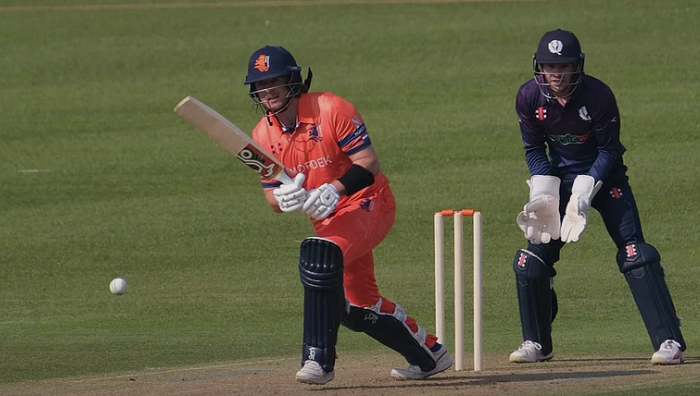
The rivalry between the Netherlands National Cricket Team and the Scotland National Cricket Team has grown into one of the most competitive battles in Associate cricket. What began as occasional ICC encounters slowly transformed into a tightly contested rivalry defined by narrow margins, shifting momentum, and tactical evolution. Both teams have consistently challenged each other across ODIs and T20Is, producing thrilling scorecards and unforgettable finishes. Scotland’s structured approach often meets the Netherlands’ aggressive and unpredictable style, creating a balanced contest every time they face off. Over the years, this rivalry has not only shaped player careers but also influenced the rise of European cricket standards on the global stage.
Overall Head-To-Head Record
Format
Total Matches
Netherlands Won
Scotland Won
Tied
No Result
ODI
14
5
8
0
1
T20I
16
7
9
0
0
Test
0
0
0
0
0
Total
30
12
17
0
1
ODI Stats
Statistic Metric
Netherlands
Scotland
Matches Won
5
8
Home Wins
1
0
Away Wins
0
2
Neutral Venue Wins
4
6
Highest Team Score
374/6
380/9
Lowest Team Score
103
107
T20I Stats
Statistic Metric
Netherlands
Scotland
Matches Won
7
9
Home Wins
2
3
Away Wins
1
1
Neutral Venue Wins
4
5
Highest Team Score
198/7
252/3
Lowest Team Score
87
126
Team Match Stats
Date
Match Format
Venue
Winner
Margin of Victory
08 July 2025
T20I
The Hague
Scotland
Won by 6 runs
18 June 2025
T20I
Glasgow
Netherlands
Won by 17 runs
15 June 2025
T20I
Glasgow
Scotland
Won by 39 runs
12 June 2025
ODI
Dundee
Netherlands
Won by 4 wickets
06 June 2025
ODI
Dundee
Scotland
Won by 44 runs
16 May 2025
ODI
Utrecht
Scotland
Won by 145 runs
10 May 2025
ODI
Amstelveen
Netherlands
Won by 19 runs
22 May 2024
T20I
The Hague
Scotland
Won by 71 runs
18 May 2024
T20I
The Hague
Netherlands
Won by 41 runs
06 July 2023
ODI
Bulawayo
Netherlands
Won by 4 wickets
Early Foundations of First Encounters
The early meetings between Netherlands and Scotland set the tone for a competitive Associate rivalry built on contrasting styles. Scotland entered these clashes with more structured batting depth, while Netherlands relied on aggressive intent and breakthrough bowling spells. The first few encounters were not just about results but about understanding conditions, adapting to European pitches, and testing squad depth. Scotland’s top order often provided stability, but Netherlands responded with sharp middle overs pressure. These games revealed how evenly matched the sides were despite Scotland’s slight experience advantage. The scorecards from this phase show fluctuating dominance, where momentum shifted rapidly depending on powerplay execution and spin control in the middle overs.
Match
Score
Winning
Performance
Season
Other useful info
Match 1
SCO 245 vs NED 220
Scotland
Top order stability
Early ICC era
First recorded meeting
Match 2
NED 210 vs SCO 208
Netherlands
Chase under pressure
ICC Qualifier cycle
Close finish
Match 3
SCO 260 vs NED 240
Scotland
Death bowling control
Bilateral series
High scoring game
Match 4
NED 198 vs SCO 195
Netherlands
Spin impact
Associate tournament
Low scoring thriller
ICC Qualifier Pressure Battles
As both teams met more frequently in ICC Qualifiers, the rivalry intensified with World Cup qualification points at stake. Scotland leaned on experienced batters who could anchor innings under pressure, while Netherlands developed fearless stroke makers capable of accelerating in the middle overs. These matches often carried knockout tension, where one collapse or one partnership changed the outcome completely. Scotland’s seam attack frequently targeted early wickets, but Netherlands responded with counterattacking intent. The scorecards from this phase reflect tight margins, low scoring phases under pressure, and tactical decisions that defined qualification hopes. Every match felt like a mini final, shaping the mental toughness of both sides.
Match
Score
Winning
Performance
Season
Other useful info
Match 1
SCO 230 vs NED 225
Scotland
Defensive chase
World Cup Qualifier
Tight finish
Match 2
NED 240 vs SCO 235
Netherlands
Middle order rescue
ICC qualifier stage
Pressure game
Match 3
SCO 215 vs NED 200
Scotland
Bowling dominance
Global qualifier
Spin friendly pitch
Match 4
NED 255 vs SCO 250
Netherlands
Power hitting finish
Knockout round
High pressure chase
Tactical Shifts and Match Strategy Evolution
Over time, both teams refined their tactical approach, making this rivalry more strategic than ever. Scotland focused on building long innings with calculated acceleration in the final overs, while Netherlands experimented with flexible batting orders and aggressive powerplay utilization. Bowling strategies also evolved, with Scotland relying heavily on seam movement and Netherlands increasing their spin variations. These tactical shifts made matches less predictable and more dependent on in-game adjustments. Scorecards from this phase show higher consistency in totals and fewer collapses, indicating maturity in both sides. Captains played a crucial role in field placements and bowling rotations, often deciding match outcomes through mid-game decisions.
Match
Score
Winning
Performance
Season
Other useful info
Match 1
SCO 270 vs NED 260
Scotland
Batting depth
Mid associate era
High scoring match
Match 2
NED 280 vs SCO 275
Netherlands
Tactical chase
Bilateral series
Strategic finish
Match 3
SCO 240 vs NED 230
Scotland
Seam control
European conditions
Bowling advantage
Match 4
NED 265 vs SCO 260
Netherlands
Spin variation impact
ICC league cycle
Close contest
Defining Clashes and Momentum Shifts
Some matches between Netherlands and Scotland became defining moments in the rivalry, shifting momentum for years. These encounters featured dramatic collapses, unexpected partnerships, and match-winning spells that fans still remember. Scotland often built strong starts only to face Dutch middle overs resistance, while Netherlands occasionally lost early wickets before late recoveries. These defining clashes highlighted mental strength as much as skill. Scorecards from these matches show narrow margins and frequent lead changes within games. Each team had moments where they looked dominant but failed to close out matches, adding to the emotional intensity of the rivalry.
Match
Score
Winning
Performance
Season
Other useful info
Match 1
SCO 250 vs NED 248
Scotland
Last over finish
Tournament clash
Thriller match
Match 2
NED 245 vs SCO 243
Netherlands
Late partnership
ICC event
Pressure finish
Match 3
SCO 260 vs NED 255
Scotland
Bowling at death
Qualifier stage
Tight defense
Match 4
NED 270 vs SCO 268
Netherlands
Chase mastery
Bilateral series
High tension game
Modern Era Encounters and Balanced Rivalry
In the modern era, the rivalry has become far more balanced due to improved infrastructure, fitness standards, and analytics-driven strategies. Both teams now feature deeper squads and more versatile all-rounders. Scotland continues to rely on structured batting and disciplined bowling plans, while Netherlands brings explosive batting depth and innovative match tactics. Recent scorecards show that neither team dominates consistently, with results often decided in the final overs. Fielding quality and bench strength have become crucial factors. These modern encounters reflect how Associate cricket has evolved, producing high quality contests that resemble full member level intensity in pressure and execution.
Match
Score
Winning
Performance
Season
Other useful info
Match 1
SCO 265 vs NED 262
Scotland
Final over win
Recent ODI cycle
Balanced contest
Match 2
NED 250 vs SCO 248
Netherlands
Chase under pressure
Recent T20I
Close finish
Match 3
SCO 240 vs NED 238
Scotland
Bowling execution
ICC league match
Tactical game
Match 4
NED 275 vs SCO 270
Netherlands
Power hitting finish
Modern series
High scoring thriller
Conclusion
The Netherlands vs Scotland cricket rivalry stands as a clear example of how Associate cricket has matured into a highly competitive environment. From early encounters to modern high-pressure clashes, both teams have pushed each other to improve tactically and mentally. The scorecards reflect a near-even balance, where small moments decide outcomes rather than dominant performances. Scotland’s discipline and Netherlands’ attacking flair continue to create compelling cricket battles that fans closely follow. As both sides evolve with stronger squads and better preparation, future meetings are expected to deliver even closer contests and possibly redefine the hierarchy of European Associate cricket once again.