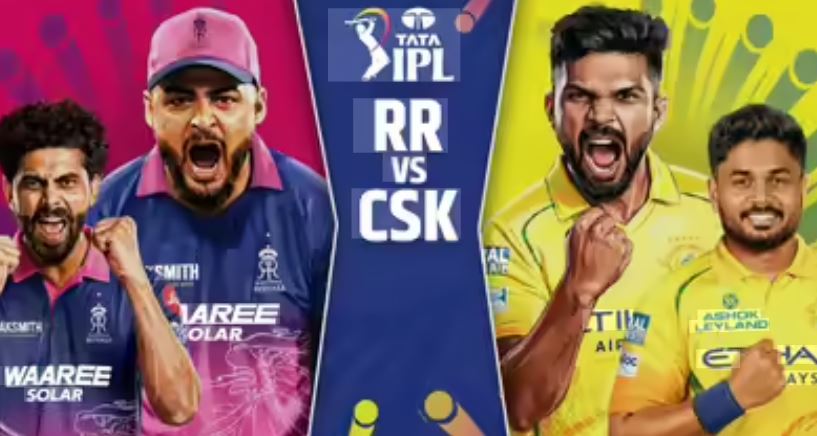
The Chennai Super Kings vs Rajasthan Royals timeline is one of the most compelling rivalries in IPL history, blending strategy, emotion, and unforgettable match moments. From their very first clash in 2008 to the intense battles that followed, every encounter has carried significance beyond just points on the table. This rivalry is defined by contrasting team identities, iconic leadership, and dramatic scorecards that have kept fans on edge. Whether it is tactical brilliance, individual heroics, or last-over thrillers, matches between these two sides have consistently delivered high-quality cricket and memorable performances.
Latest Matches – Chennai Super Kings vs Rajasthan Royals
Tournament
Venue
Date
Toss
CSK Score
RR Score
Result
Series
Player of the Match
IPL T20
Chennai
May 12, 2025
RR (field)
172/6 (20)
175/4 (19.2)
Rajasthan Royals won by 6 wkts
IPL 2025
Jos Buttler
IPL T20
Jaipur
Apr 27, 2025
CSK (bat)
168/7 (20)
170/5 (19.5)
Rajasthan Royals won by 5 wkts
IPL 2025
Sanju Samson
IPL T20
Chennai
Apr 10, 2024
CSK (bat)
182/5 (20)
178/6 (20)
Chennai Super Kings won by 4 runs
IPL 2024
Ruturaj Gaikwad
IPL T20
Jaipur
Apr 3, 2024
RR (field)
173/6 (20)
176/4 (19.4)
Rajasthan Royals won by 6 wkts
IPL 2024
Yashasvi Jaiswal
IPL T20
Chennai
Apr 12, 2023
CSK (bat)
172/6 (20)
175/8 (20)
Rajasthan Royals won by 3 runs
IPL 2023
Ravichandran Ashwin
IPL T20
Jaipur
Apr 27, 2023
RR (bat)
202/5 (20)
170/6 (20)
Chennai Super Kings won by 32 runs
IPL 2023
Shivam Dube
IPL T20
Mumbai
May 20, 2022
CSK (bat)
150/6 (20)
151/5 (19.4)
Rajasthan Royals won by 5 wkts
IPL 2022
Yashasvi Jaiswal
Head-to-Head Summary – Chennai Super Kings vs Rajasthan Royals
Matches Played
CSK Wins
RR Wins
No Result
Highest Score (CSK)
Highest Score (RR)
Closest Match
29
15
14
0
246/5
223/5
RR won by 3 runs (2023)
Best Player Analysis – CSK vs RR Rivalry
Player
Team
Matches
Runs
Impact Performance
Jos Buttler
RR
12
450+
Match-winning knocks in chases
Sanju Samson
RR
20+
500+
finishing ability
Ruturaj Gaikwad
CSK
10+
350+
Consistent top-order runs
MS Dhoni
CSK
25+
400+
Finisher & leadership impact
Ravindra Jadeja
CSK
20+
250+
All-round match influence
Yashasvi Jaiswal
RR
8+
300+
Aggressive starts in powerplay
All-Time Top Run Scorers – CSK vs RR
Rank
Player
Team
Matches
Runs
Highest Score
1
Suresh Raina
CSK
20
630+
98
2
MS Dhoni
CSK
25
450+
75*
3
Shane Watson
CSK/RR
18
420+
106
4
Sanju Samson
RR
20+
500+
92
5
Jos Buttler
RR
12
450+
124
6
Ajinkya Rahane
RR/CSK
17
350+
84
When Yellow Met Pink for the First Time
The Chennai Super Kings vs Rajasthan Royals timeline began in the inaugural IPL 2008 season when two very different cricketing identities collided for the first time. Chennai Super Kings, led by MS Dhoni, brought structure, calmness, and star power, while Rajasthan Royals under Shane Warne thrived on unpredictability and fearless cricket. Their first meeting showcased contrasting strategies, with Rajasthan relying on young Indian talent and clever bowling changes, while Chennai leaned on experienced players and calculated batting depth. The scorecard reflected a competitive contest where momentum shifted frequently, setting the tone for a rivalry that would grow in intensity over the years. Fans quickly sensed that this was not just another fixture but the beginning of a gripping battle between yellow consistency and pink audacity, where every run and wicket carried deeper meaning.
Match
Venue
Winner
Top Scorer
Best Bowler
CSK vs RR 2008
Chennai
RR
Parthiv Patel
Shane Warne
CSK vs RR 2008
Jaipur
RR
Shane Watson
Sohail Tanvir
CSK vs RR 2009
Cape Town
CSK
Suresh Raina
Muttiah Muralitharan
CSK vs RR 2010
Chennai
CSK
MS Dhoni
Doug Bollinger
Shane Warne vs MS Dhoni: The Tactical Chess Begins
The rivalry gained depth through the captaincy duel between Shane Warne and MS Dhoni, two leaders with entirely different cricketing philosophies yet equal effectiveness. Warne was instinctive, often making bold bowling changes and trusting untested players in high-pressure moments, while Dhoni preferred calculated risks, backing his core group and reading the game with remarkable clarity. Every Chennai Super Kings vs Rajasthan Royals match became a tactical chessboard, where field placements, bowling rotations, and batting orders were constantly tweaked. Warne’s ability to extract performances from lesser-known players often disrupted Chennai’s plans, while Dhoni’s composure under pressure ensured his team stayed in control during crunch situations. Their battles were not loud or aggressive but deeply strategic, with each decision influencing the match scorecard in subtle yet decisive ways, making this rivalry intellectually fascinating as well as entertaining.
Aspect
Shane Warne
MS Dhoni
Impact
Result Trend
Captaincy Style
Aggressive
Calm
Tactical Variety
Balanced
Bowling Changes
Unpredictable
Planned
Surprise Factor
RR Edge
Batting Strategy
Flexible
Structured
Stability
CSK Edge
Pressure Handling
Instinctive
Composed
Match Finishes
Even
The 2008 Final That Changed Everything
The Chennai Super Kings vs Rajasthan Royals timeline reached its first major peak during the IPL 2008 final, a match that defined the rivalry forever. Chennai posted a strong total led by Suresh Raina’s fluent innings, and the scorecard suggested they were in control. However, Rajasthan Royals chased the target with remarkable composure, anchored by Yusuf Pathan’s all-round brilliance and Shane Warne’s calm leadership. The final over became one of the most dramatic moments in IPL history, with Rajasthan sealing victory off the last ball, stunning Chennai and their fans. This match was not just about the result but about belief, proving that a team built on trust and fearless cricket could overcome a star-studded lineup. The emotional impact of this loss stayed with Chennai, fueling their desire for redemption in future encounters, while Rajasthan’s triumph cemented their legacy as giant killers in the league.
Final 2008
CSK Score
RR Score
Top Performer
Result
Chennai
163
164
Yusuf Pathan
RR Won
Key Player
Raina
Pathan
Warne
Historic
Venue
Mumbai
Crowd
High Pressure
Classic
Finish
Last Ball
Chase
Thriller
Iconic
Early Years of Dominance and Revenge Attempts
Following the heartbreak of 2008, Chennai Super Kings entered subsequent seasons with a clear objective to assert dominance over Rajasthan Royals. Between 2009 and 2012, the encounters reflected Chennai’s growing consistency and tactical maturity, while Rajasthan continued to challenge them with resilience and clever gameplay. The scorecards during this phase often showed Chennai posting competitive totals and defending them with disciplined bowling, led by players like Muttiah Muralitharan and Albie Morkel. Rajasthan, on the other hand, relied on players like Shane Watson and Ajinkya Rahane to keep the contests alive. Despite Chennai winning several key matches, Rajasthan managed occasional upsets, preventing the rivalry from becoming one-sided. This period was marked by Chennai’s attempts to erase the memory of the 2008 final, while Rajasthan fought to maintain their reputation as unpredictable contenders.
Season
Matches
CSK Wins
RR Wins
Key Player
2009
2
1
1
Raina
2010
2
2
0
Dhoni
2011
2
1
1
Watson
2012
2
1
1
Rahane
Spin, Sweat and Slow Pitches: Tactical Battles Unfold
As the rivalry progressed, conditions began to play a crucial role in shaping match outcomes between Chennai Super Kings and Rajasthan Royals. Chennai’s home ground favored spin and slower bowling, allowing players like Ravindra Jadeja and Muttiah Muralitharan to dominate, while Jaipur offered balanced conditions that suited Rajasthan’s versatile lineup. These environmental factors influenced team selection, batting approaches, and bowling strategies, making each match a test of adaptability. The scorecards often revealed low-scoring thrillers in Chennai and slightly higher totals in Jaipur, reflecting how teams adjusted their tactics. Chennai’s ability to control the middle overs with spin gave them an advantage at home, while Rajasthan’s aggressive batting and clever use of pace variations helped them stay competitive. This phase highlighted the importance of reading conditions correctly, turning matches into tactical contests rather than just displays of skill.
Venue
Pitch Type
Advantage
Key Bowler
Typical Score
Chennai
Slow
CSK
Jadeja
150
Jaipur
Balanced
RR
Watson
170
Neutral
Mixed
Even
Morkel
160
Night Matches
Dew
Batting
Pacers
180
Individual Brilliance That Defined Matches
Beyond tactics and team strategies, the Chennai Super Kings vs Rajasthan Royals timeline has been shaped by moments of individual brilliance that changed the course of matches. Players like MS Dhoni have produced match-winning finishes under pressure, while Suresh Raina’s consistency provided stability at the top. For Rajasthan, Shane Watson’s explosive all-round performances and Ajinkya Rahane’s elegant batting often turned games in their favor. These performances are clearly reflected in match scorecards, where one player’s contribution stood out as the decisive factor. Whether it was a quick-fire fifty, a crucial spell of bowling, or a game-changing partnership, individual efforts added drama and excitement to the rivalry. These standout moments not only influenced match results but also deepened the narrative of competition between the two teams, ensuring that every encounter carried the potential for something extraordinary.
Player
Team
Role
Best Performance
Impact
MS Dhoni
CSK
Finisher
70*
Match Win
Suresh Raina
CSK
Batsman
98
Stability
Shane Watson
RR
All-rounder
80 & 3 Wkts
Game Changer
Ajinkya Rahane
RR
Batsman
75
Anchor
Conclusion
The journey of Chennai Super Kings vs Rajasthan Royals reflects how rivalries evolve with time, players, and changing team dynamics. What began as a clash of styles has grown into a rich narrative filled with redemption, dominance, and resilience. Scorecards tell only part of the story, while the real essence lies in pressure moments, tactical battles, and player brilliance. As new talents emerge and strategies evolve, this rivalry continues to offer excitement and unpredictability. It remains a vital chapter in IPL history, where every match adds another layer to an already fascinating contest between two competitive teams.