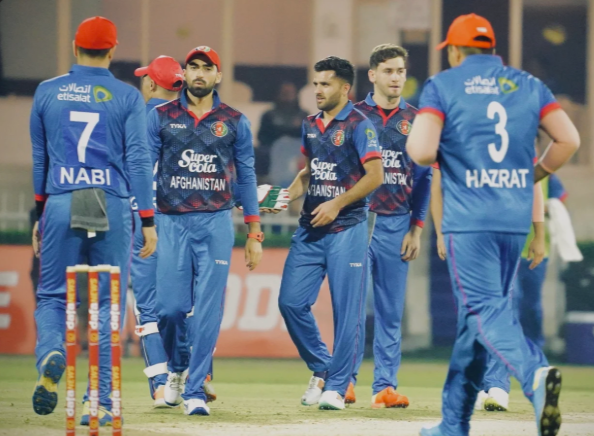
The India National Cricket Team vs Afghanistan National Cricket Team stats tell a story that goes beyond wins and losses. It is a journey of growth, respect, and rising ambition. India entered this rivalry as a dominant force in world cricket, while Afghanistan arrived with passion and determination shaped by years of struggle. Their encounters have evolved from one-sided contests into competitive clashes filled with tension and learning. Each match has added depth to the rivalry, showcasing fearless Afghan cricket and composed Indian performances. This is not just a statistical comparison, but a narrative of how a young team challenged an established giant.
Latest Encounters: India vs Afghanistan
Tournament
Venue
Date
Toss
India Score
Afghanistan Score
Result
Series
Player of the Match
T20 World Cup
Bridgetown
Jun 20, 2024
India (bat)
181/8 (20 ov)
134 (20 ov)
India won by 47 runs
T20 World Cup
Suryakumar Yadav (IND)
Bilateral T20I
Bengaluru
Jan 17, 2024
India (bat)
212/4 (20 ov)
212/6 (20 ov)
India won (2nd Super Over)
Bilateral T20I
Rohit Sharma (IND)
Bilateral T20I
Indore
Jan 14, 2024
India (field)
173/4 (15.4 ov)
172 (20 ov)
India won by 6 wkts
Bilateral T20I
Axar Patel (IND)
Bilateral T20I
Mohali
Jan 11, 2024
India (field)
159/4 (17.3 ov)
158/5 (20 ov)
India won by 6 wkts
Bilateral T20I
Shivam Dube (IND)
Cricket World Cup
Delhi
Oct 11, 2023
Afghan (bat)
273/2 (35 ov)
272/8 (50 ov)
India won by 8 wkts
World Cup
Rohit Sharma (IND)
Asian Games
Hangzhou
Oct 7, 2023
India (field)
DNB
112/5 (18.2 ov)
No Result (Rain)
Asian Games
N/A
Asia Cup
Dubai
Sep 8, 2022
Afghan (field)
212/2 (20 ov)
111/8 (20 ov)
India won by 101 runs
Asia Cup
Virat Kohli (IND)
All-Time Head-to-Head Record
Format
Matches
India Won
Afghanistan Won
Tie/No Result
Test
1
1
0
0
ODI
4
3
0
1
T20I
9
8
0
1
Total
14
12
0
2
All-Time Batting Leaders
Rank
Player
Team
Matches
Runs
Highest Score
1
Virat Kohli
IND
8
341
122*
2
Rohit Sharma
IND
8
386
131
3
KL Rahul
IND
6
277
69
4
Mohammad Shahzad
AFG
8
165
124
5
Mohammad Nabi
AFG
10
219
64
All-Time Bowling Leaders
Rank
Player
Team
Format
Wickets
Best Figures
1
Ravindra Jadeja
IND
Combined
14
4/33
2
Jasprit Bumrah
IND
Combined
12
4/17
3
Rashid Khan
AFG
Combined
10
3/23
4
Ravichandran Ashwin
IND
Combined
9
2/29
5
Mohammed Shami
IND
Combined
8
4/40
A Rivalry Born from Respect, Not History
The story behind the India National Cricket Team vs Afghanistan National Cricket Team stats begins not with fierce hostility, but with deep respect and admiration. When Afghanistan stepped onto the international stage, they carried dreams shaped by struggle, resilience, and a passion for cricket that grew in the harshest conditions. India, already a global powerhouse, became more of a guiding presence than a traditional rival. Early encounters reflected this dynamic clearly, as the scorecards often leaned heavily in India’s favor, yet Afghanistan’s players showed glimpses of fearless intent. Fans noticed how Afghan cricketers looked up to Indian stars, often sharing dressing room moments filled with learning rather than tension. Still, beneath that respect, a quiet hunger was building. Afghanistan did not just want to participate, they wanted to compete. Each match added a new layer to the rivalry, slowly shifting it from admiration to ambition. The numbers in the India vs Afghanistan scorecard began to tell a story of growth, where respect remained intact, but the desire to challenge India grew stronger with every game played.
Match
Format
Winner
Key Highlight
2014
ODI
India
Afghanistan’s first major clash vs India
2018
Test
India
Afghanistan’s debut Test match
2019
ODI WC
India
Close contest with strong Afghan fight
2021
T20 WC
India
High scoring dominant Indian performance
2023
ODI WC
India
Improved Afghan bowling effort
The First Meeting That Made Headlines
The first official clash that truly brought the India National Cricket Team vs Afghanistan National Cricket Team stats into global focus came during the 2014 Asia Cup, and it instantly became more than just another fixture. For Afghanistan, sharing the field with India was a moment of pride and validation after years of and struggle. For India, it was a chance to witness a rising team that had already begun turning heads. The scorecard, however, told a predictable story. India’s batting depth proved too strong, with experienced players controlling the innings and setting a competitive total. Yet, Afghanistan refused to fade quietly. Their bowlers showed discipline, and their batters played with surprising composure against a world-class attack. What stood out was not just the result, but the attitude. Afghanistan played with courage, taking calculated risks and showing they belonged on the same stage. Fans and analysts began to take notice, realizing this was not a one-off appearance but the beginning of something bigger. That first match laid the foundation of a rivalry where respect met ambition, and the headlines were not just about India’s win, but Afghanistan’s arrival.
Match
Tournament
Result
Key Performance
2014
Asia Cup
India won
Solid Indian batting display
2014
Asia Cup
Afghanistan
Disciplined bowling effort
2014
Asia Cup
India
Strong middle-order contribution
2014
Asia Cup
Afghanistan
Fearless batting approach
From One-Sided Games to Competitive Sparks
As the India National Cricket Team vs Afghanistan National Cricket Team stats continued to grow, the early narrative of one-sided contests slowly began to shift. India still dominated most matches with their depth, experience, and composure under pressure, but Afghanistan started adding layers of resistance that could not be ignored. The scorecards, once heavily tilted, began to reflect tighter moments, especially in the middle overs where Afghan bowlers found rhythm. Players like Rashid Khan and Mohammad Nabi brought control and unpredictability, making Indian batters work harder for every run. On the other hand, Afghanistan’s batting, though inconsistent, showed flashes of brilliance with aggressive starts and fearless stroke play. There were moments when India had to rethink strategies, adjust to spin-heavy attacks, and rebuild innings rather than cruise to victory. These small but significant shifts marked the transition from predictable outcomes to competitive sparks. While India still finished on top, Afghanistan had begun to leave an impression that went beyond the result. The rivalry was no longer just about dominance, it was slowly becoming about challenge, growth, and the promise of closer contests in the future.
Match
Format
Winner
Turning Point
2016
T20
India
Afghan middle-over pressure
2018
T20
India
Rashid Khan’s tight spell
2019
ODI WC
India
Low scoring thriller
2021
T20 WC
India
Afghan early aggression
2022
T20
India
Late Indian acceleration
The Test Match That Changed Perception
The one-off Test between the India National Cricket Team and Afghanistan National Cricket Team in 2018 at Bengaluru marked a historic milestone that reshaped the India National Cricket Team vs Afghanistan National Cricket Team stats narrative. It was Afghanistan’s debut in Test cricket, and while the result appeared one-sided, the occasion carried far deeper meaning. India’s dominance was evident from the start, as their batters piled on runs with authority and their bowlers exposed the inexperience of a side new to the longest format. The scorecard showed a convincing Indian victory inside two days, underlining the gap in red-ball experience. Yet, beyond the numbers, the match symbolized Afghanistan’s arrival in elite cricket circles. Facing a top-ranked Test side like India was a learning curve that no training session could replicate. Afghan players struggled with technique and patience, but they also gained invaluable exposure to the demands of Test cricket. For India, it was a chance to support and welcome a rising cricket nation. This match did not intensify rivalry in the traditional sense, but it changed perception, showing that Afghanistan belonged on the biggest stage, even if the journey ahead was still long.
Match
Format
Result
Key Insight
2018
Test
India won
Afghanistan Test debut
2018
Test
India
Dominant batting display
2018
Test
India
Strong bowling attack
2018
Test
Afghanistan
Learning experience
2018
Test
Overall
Historic milestone
World Cup Stage Pressure and Unexpected Resistance
When the India National Cricket Team vs Afghanistan National Cricket Team stats reached the World Cup stage, the dynamic shifted dramatically. This was no longer just another bilateral clash. It was a global platform where pressure magnified every moment, every run, every . The 2019 ICC Cricket World Cup encounter became a defining chapter in this rivalry. On paper, India were overwhelming favorites, but the scorecard told a far more gripping story. Afghanistan’s bowlers, led by disciplined spin and sharp fielding, kept India under constant pressure, restricting a powerful batting lineup to a modest total. Suddenly, the match was alive with tension. Afghan batters, though inexperienced, showed resilience and belief, pushing the chase deeper than expected. For a moment, an upset seemed possible, and Indian players felt the heat. It took composure and experience for India to finally close the game, but the narrow margin revealed something significant. Afghanistan were no longer just participants, they were competitors capable of challenging top teams on the biggest stage. That World Cup clash turned respect into real contest, proving that under pressure, Afghanistan could stand tall and make even giants uncomfortable.
Match
Tournament
Result
Key Moment
2019
ODI World Cup
India won
Low scoring thriller
2019
ODI World Cup
Afghanistan
Tight bowling spell
2019
ODI World Cup
India
Late game control
2019
ODI World Cup
Afghanistan
Strong resistance
2019
ODI World Cup
Overall
Match went down to final overs
T20 Encounters and the Rise of Fearless Cricket
The shortest format brought a completely different energy to the India National Cricket Team vs Afghanistan National Cricket Team stats, and this is where Afghanistan truly began to express themselves without hesitation. T20 cricket suited their natural style, aggressive, unpredictable, and bold. Unlike longer formats where patience is key, Afghanistan embraced the fast pace, taking on India with attacking intent right from the first ball. The scorecards in these encounters often showed India posting big totals, powered by their deep batting lineup, but Afghanistan responded with fearless stroke play that kept the pressure alive. What made these clashes interesting was Afghanistan’s spin attack. Bowlers like Rashid Khan turned matches into tactical battles, forcing Indian batters to rethink their approach. There were moments when India looked slightly uncomfortable, especially in the middle overs where scoring slowed down. Even when India won convincingly, Afghanistan left an impression with their energy and fighting spirit. These T20 encounters added excitement to the rivalry, showing that Afghanistan were no longer just learning, they were challenging, adapting, and playing a brand of cricket that demanded attention.
Match
Format
Winner
Key Highlight
2016
T20 WC
India
Strong Indian batting
2018
T20
India
Rashid Khan’s impact
2021
T20 WC
India
High scoring match
2022
T20 Asia Cup
India
Late batting surge
2023
T20
India
Competitive Afghan start
Player Battles That Added Edge to the Rivalry
As the India National Cricket Team vs Afghanistan National Cricket Team stats evolved, the rivalry found its true intensity in individual player battles that brought drama to every contest. While the overall results often leaned towards India, certain matchups created moments of genuine tension. The contest between Rashid Khan and Virat Kohli became one of the most talked-about duels, where skill met precision. Rashid’s sharp googlies and tight lines often tested Kohli’s patience, turning routine overs into mini battles within the match. Similarly, Mohammad Nabi used his experience to challenge India’s middle order, while Rohit Sharma countered with elegant stroke play that could dismantle any bowling plan. These clashes were not just about wickets or runs, but about momentum and psychological advantage. Afghan bowlers aimed to disrupt India’s rhythm, while Indian batters relied on composure and technique to regain control. Each encounter added a new chapter to these personal rivalries, making the scorecards more than just numbers. They became records of battles fought ball by ball, where pride, reputation, and belief were always at stake.
Player Battle
Format
Outcome
Key Moment
Rashid Khan vs Virat Kohli
T20
Balanced
Tight middle overs
Nabi vs Indian Middle Order
ODI
Competitive
Control and wickets
Rohit Sharma vs Afghan Pace
T20
India
Aggressive starts
Afghan Spin vs Indian Batting
ODI
India
Tactical adjustments
Bumrah vs Afghan Top Order
T20
India
Early breakthroughs
Conclusion
The India National Cricket Team vs Afghanistan National Cricket Team stats reflect a rivalry that continues to grow with every encounter. While India has maintained dominance in results, Afghanistan has steadily closed the gap through skill, confidence, and fearless cricket. From early admiration to competitive battles, the journey has been inspiring for fans across the world. Scorecards now reveal tighter contests, stronger performances, and moments of genuine pressure for both sides. This rivalry stands as a symbol of cricket’s evolving landscape, where emerging teams are no longer just participants but serious challengers ready to shape the future of the game.